
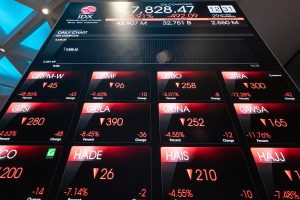

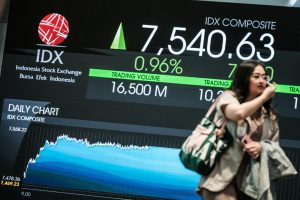
The Jakarta Composite Index (IHSG) is the primary indicator of stock market performance in Indonesia. It tracks the overall movement of all listed companies on the Indonesia Stock Exchange (IDX) and reflects the health of the country’s financial markets.
Today, the IHSG continues to attract attention from investors as global economic conditions, domestic economic growth, and foreign capital flows influence the Indonesian stock market.
In this article, we explore the latest IHSG trends today, key factors affecting the market, and the outlook for Indonesia’s stock market in 2026.
IHSG Performance Today
Recent market data shows that the IHSG is trading around the 7,200–7,400 range, reflecting moderate volatility in the Indonesian stock market. This movement follows mixed global signals from major financial markets.
Despite short-term fluctuations, the Indonesian stock market remains supported by strong domestic consumption, infrastructure development, and steady corporate earnings growth.
Investors are also paying close attention to sectors such as:
- Banking and financial services
- Energy and commodities
- Technology companies
- Consumer goods
These sectors continue to play a major role in driving IHSG movements.
Key Factors Affecting IHSG Trends
1. Global Economic Conditions
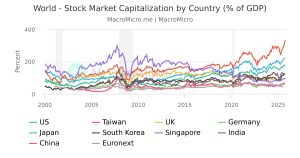


Global economic developments have a significant impact on the Indonesian stock market. Changes in interest rates, inflation levels, and geopolitical events can affect investor sentiment and capital flows.
For example, when the US Federal Reserve increases interest rates, investors often move funds toward US assets, which can temporarily reduce investment in emerging markets like Indonesia.
However, stable global conditions usually encourage foreign investors to return to high-growth markets such as Southeast Asia.
2. Domestic Economic Growth
Indonesia’s economic performance also plays an important role in shaping IHSG trends. Strong GDP growth, stable inflation, and government infrastructure spending support investor confidence.
Key domestic indicators include:
- Indonesia’s GDP growth rate
- Inflation and interest rate levels
- Government fiscal policy
- Consumer spending and business investment
When these indicators show positive trends, the stock market generally responds with higher investor activity.
Sector Performance in the Indonesian Stock Market

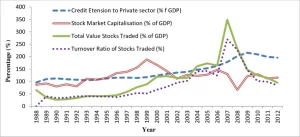
Several sectors have recently contributed to movements in the IHSG.
Banking Sector
Large Indonesian banks continue to dominate market capitalization and attract strong investor interest due to stable profitability and digital banking expansion.
Energy and Commodities
Indonesia’s natural resources, including coal, nickel, and palm oil, remain major contributors to export revenue and stock market performance.
Technology and Digital Economy
Although the tech sector experienced volatility in previous years, the long-term outlook remains positive due to Indonesia’s rapidly growing digital economy.
IHSG Forecast for 2026
Market analysts expect the IHSG to maintain steady growth in 2026, supported by Indonesia’s strong economic fundamentals and increasing foreign investment.
Some projections suggest the index could move toward the 7,500–7,800 range if global economic conditions remain stable.
Key drivers for future growth may include:
- Expansion of Indonesia’s digital economy
- Infrastructure investment
- Strong domestic consumption
- Continued growth in commodity exports
However, investors should remain aware of global risks that could influence market volatility.
Why Investors Watch IHSG Closely
The IHSG is not only important for Indonesian investors but also for international investors seeking opportunities in emerging markets.
The index provides insights into:
- Indonesia’s economic health
- Corporate performance across industries
- Investor confidence in Southeast Asia’s largest economy
Because Indonesia has one of the fastest-growing economies in the region, the IHSG continues to be a key benchmark for investment opportunities.
Conclusion
The IHSG today reflects a dynamic and evolving Indonesian stock market influenced by both global and domestic economic factors. While short-term volatility remains part of financial markets, Indonesia’s strong economic fundamentals provide long-term growth potential.
For investors, understanding IHSG trends can help identify opportunities in sectors such as banking, energy, and technology.
As Indonesia continues to develop its economy and attract foreign investment, the IHSG will remain an important indicator of the country’s financial market performance.


