The USD/IDR exchange rate, which represents the value of the US Dollar against the Indonesian Rupiah, is one of the most important indicators for Indonesia’s economy. Investors, businesses, and policymakers closely monitor this currency pair because it reflects global financial conditions and domestic economic stability.
Today, the USD/IDR exchange rate continues to fluctuate as global markets react to economic policy changes, interest rate decisions, and geopolitical developments. Understanding these trends is essential for traders, importers, exporters, and investors.
USD IDR Exchange Rate Today
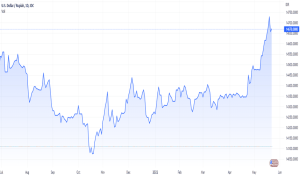
Recent data shows that the USD/IDR exchange rate is trading around 16,900–16,970 rupiah per US dollar, reflecting moderate volatility in the foreign exchange market.
Over the past month, the Indonesian Rupiah has experienced slight weakening against the US Dollar due to global economic pressures and capital flow changes. Analysts note that the rupiah has fallen around 2.5% over the past year, highlighting ongoing pressure from global currency markets.
Despite this volatility, Indonesia’s central bank continues to implement policies aimed at maintaining currency stability and controlling inflation.
Key Factors Affecting USD IDR Trends

1. Interest Rates and Monetary Policy
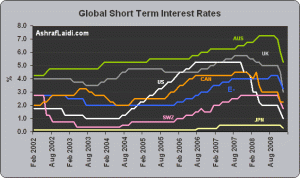
Interest rates are one of the most important factors influencing currency values. When the US Federal Reserve raises interest rates, the US dollar tends to strengthen because investors seek higher returns in US assets.
At the same time, Bank Indonesia adjusts its monetary policy to maintain economic stability and manage inflation within its target range.
Interest rate differences between the US and Indonesia often drive short-term movements in the USD/IDR exchange rate.
2. Global Economic Conditions



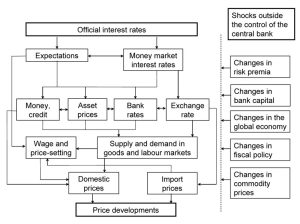
Global economic developments also have a strong influence on the USD/IDR exchange rate. Factors such as:
- Global inflation trends
- Commodity prices
- International trade conditions
- Investor risk sentiment
can all affect demand for the US Dollar and emerging market currencies like the Indonesian Rupiah.
For example, rising commodity prices can support Indonesia’s currency because the country exports natural resources such as coal, palm oil, and nickel.
USD IDR Forecast for 2026
Financial analysts expect the USD/IDR exchange rate to remain within the 16,600–17,100 range during 2026, depending on global economic conditions and interest rate policies.
Some economic projections suggest the rupiah could stabilize or strengthen if global interest rates decline and foreign investment flows return to Indonesia.
However, currency markets remain highly sensitive to geopolitical risks, inflation trends, and monetary policy decisions.
Impact of USD IDR Movements
Changes in the USD/IDR exchange rate can have a major impact on Indonesia’s economy.
Key impacts include:
- Import costs: A weaker rupiah increases the cost of imported goods such as fuel and electronics.
- Export competitiveness: A weaker currency can benefit exporters by making Indonesian products cheaper internationally.
- Inflation pressure: Currency depreciation can lead to higher domestic prices.
- Investment flows: Exchange rate stability helps attract foreign investors.
Because of these effects, maintaining a stable exchange rate is a key priority for economic policymakers.
Conclusion
Exchange rate today reflects the complex interaction between global financial markets and Indonesia’s domestic economy. Current trends show moderate volatility, with the rupiah trading near the 16,900 range against the US dollar.
Going forward, the direction of the pair will depend on several factors, including global interest rates, commodity prices, and investor confidence in emerging markets.
For businesses, investors, and policymakers, monitoring currency trends remains crucial for navigating the global economic landscape.